


Franz Peter Schubert 1797–1828.
A captivating micro destiny.
Schubert, the musical genius that survived as a homeless freelancer but died young and in poor health.
He only became recognized and admired after his death.
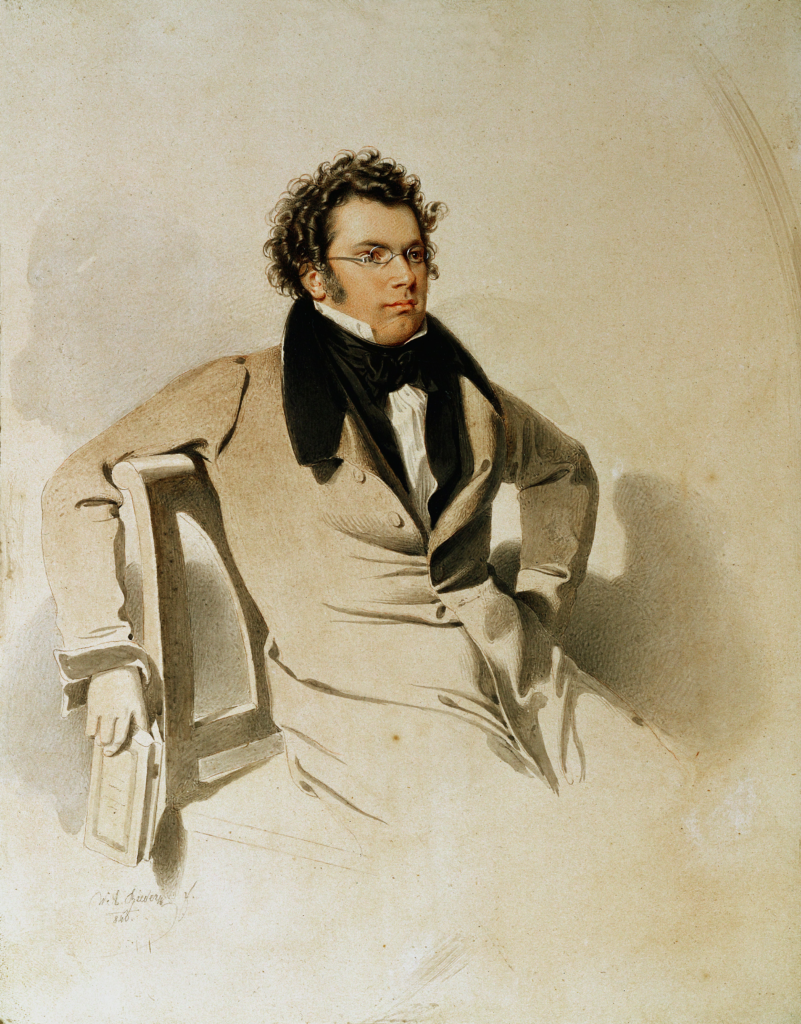
Table of content
- Franz Peter Schubert 1797–1828.
- Franz Schubert and his closest family.
- Schubert created over a thousand musical works.
- Schubert’s education.
- Franz Schubert’s various mentors.
- Motivators and future Schubertians.
- Reluctance to follow the father's footsteps.
- Schubert follows his own path.
- It is going alright.
- Even more success for Franz
- Musical milestones, a humble selection
- A typical day in Franz Peter Schubert life
- Schubert in the salons of Vienna’s High Society
- Schubert and the Schubertians
- The final years
- The End
- Schuberts’ Lieder
- The choice of Lieder in SchubertAppen.
- Du bist die Ruh Op.59 No.8
- Ave Maria, Ellens dritter Gesang, Op. 52 No.6
- Nachtstück, Op.36 No.2
- Frülingsglaube, Op.20 No.2
- Seligkeit, D.433
- The song cycles.
- Thoughts and viewpoints.
- More thoughts and viewpoints.
Franz Schubert and his closest family.
Franz Peter Schubert was born in Vienna, Austria, January 31, 1797, as one of fourteen siblings. Five of the children in the family reached adulthood.
His father, Franz Theodor Florian (1763-1830) was a hard-working, frugal, and dutiful teacher with high moral ideals, in tune with the contemporary zeitgeist. His mother, Elizabeth Catherine Vietz (1756-1812) had the task of women of the era to breed and raise fourteen children.
The siblings who survived childhood were Ignaz (1785-1844), Ferdinand (1794-1859), Carl (1795-1855) and Therese (1801-?).
Schubert created over a thousand musical works.
- Symphonic works
- Piano quintets
- Piano quartets
- Piano sonatas
- Small pieces for piano
- Piano Works for Four Hands
- Masses
- Operas
- And lastly, at least six hundred Lieder
A Lied is a German song genre, a little dramatic piece accompanied on the piano. The songs were performed in smaller contexts at private enclosed events.
The Lied, the most intimate subgenre of chamber music was created primarily for private enjoyment. In Schubert's Vienna the practitioners were often women who made music in their own homes.
Schubert’s education.
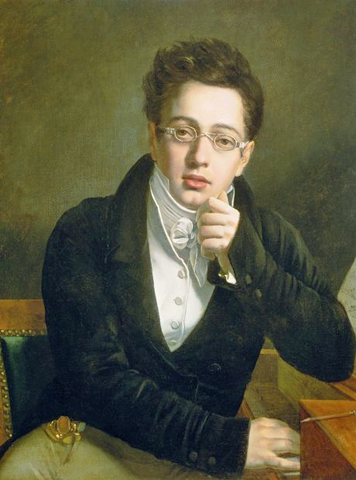
In 1803 Franz entered his father's school, and his musical talent was soon noticed. Young Franz and his brother Ignaz were taught by their father to play the violin and the piano.
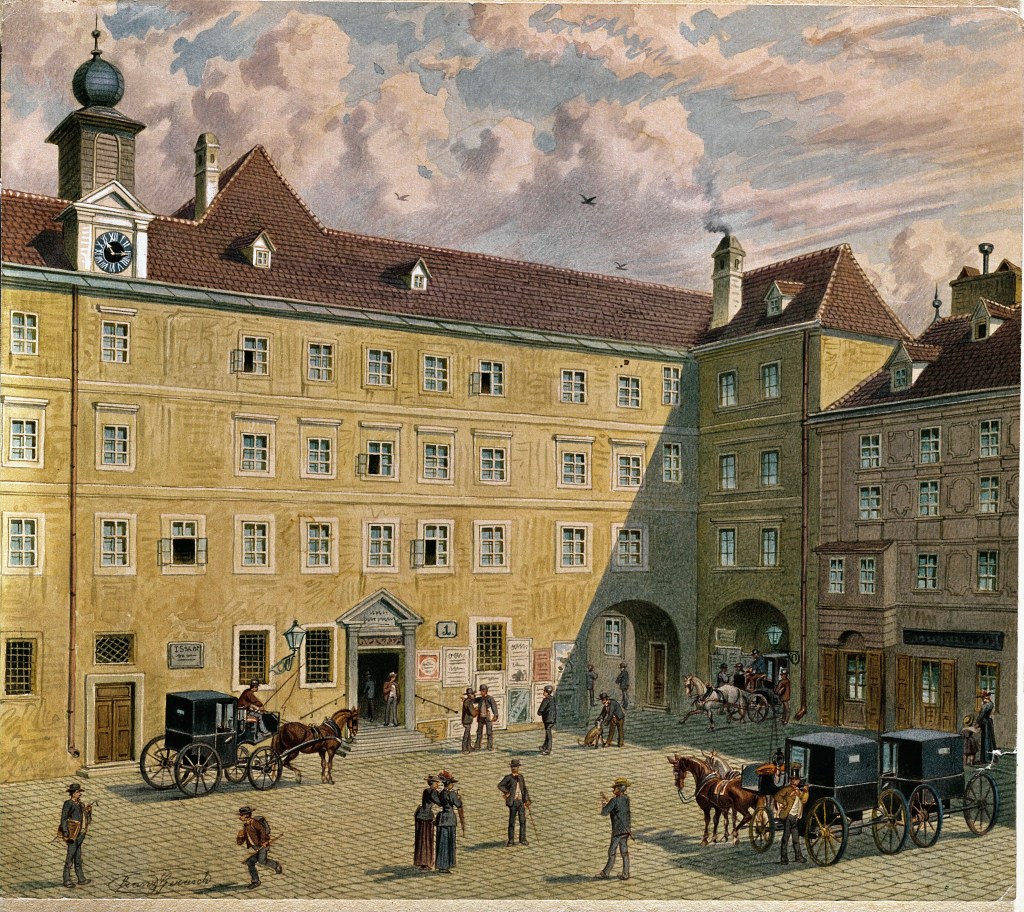
Director of music Michael Holzer taught the talented Franz singing skills, church organ and basso continuo, according to the contemporary tradition.
The family's male members devoted themselves diligently to playing string quartet, one of the era’s fads. At eight years of age, he made his first attempts at composing music. In 1808 the talented young man was admitted as a choirboy, so called Sängerknaben, in Vienna's Stadtkonvikt. Soon, he settled in the monastery boarding school.
Franz Schubert’s various mentors.
The director of music Michael Holzer (1772-1826) served the church in Lichtental and took charge of Franz’s initial musical training. Thus, he created the future conditions for Schubert's composing.
The imperial Stadtkonvikt of Vienna and the Royal Chapel meanwhile accepted the young Franz as a Sängerknabe in the boys’choir in 1808.
Being a Sängerknabe along with the high demands of the Konvikt probably contributed to his impressive musical development.
Wenzel Ruzicka (1758-1823) and Antonio Salieri (1750–1825) were Schubert’s teachers in counterpoint and composition during different periods.
Motivators and future Schubertians.
Joseph von Spaun, Albert Stadler and
Anton Holzapfel were Schubert's good friends from the boarding school and became his great motivators. It is said that Von Spaun provided Schubert with music sheets.
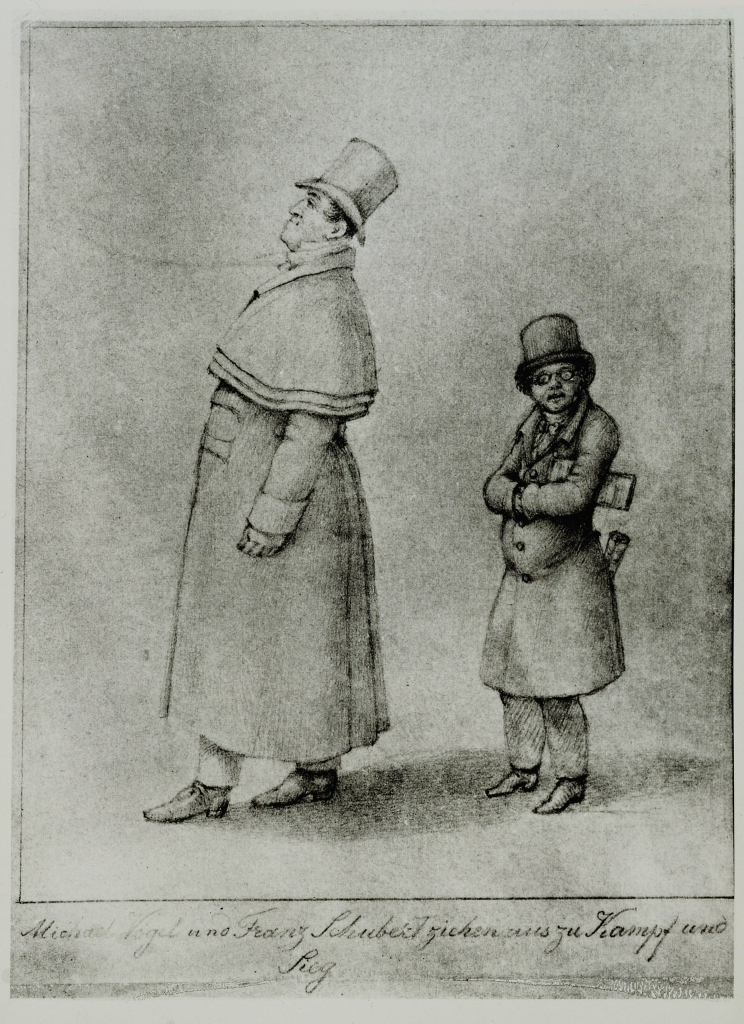
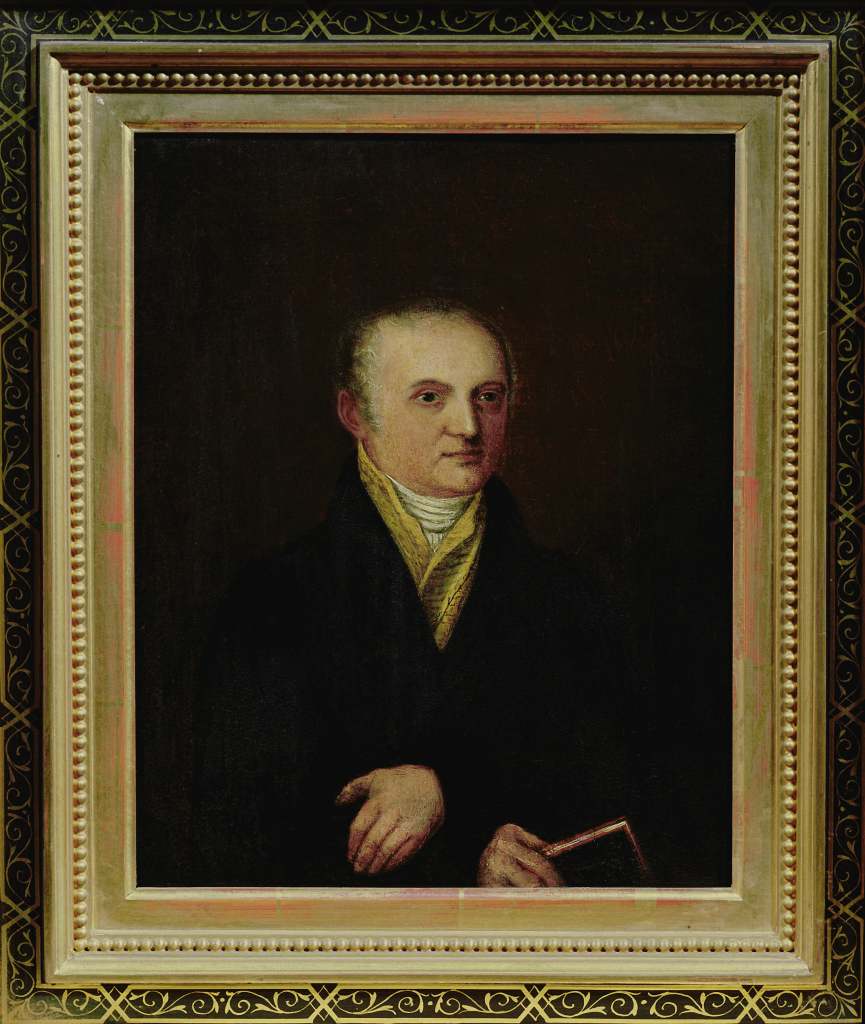
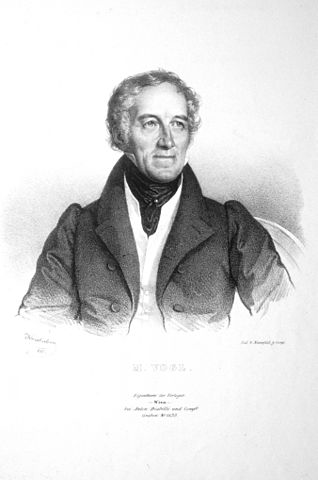
Johann Michael Vogl (1768-1840) was an opera singer and a friend of Schubert's. He was also the first great interpreter of Schubert’s works.
Franz von Schober (1796-1882) was a poet and a patron who helped Schubert in building a social network and often had him as a lodger. He was born in the Torup Manor in Skåne, Sweden.
Reluctance to follow the father's footsteps.
The nine-year-old Franz composed music, completely unmoved by his peers playing and romping noisily around him.
The father disapproved of his son's growing interest in composition and invited him instead to choose the secure income of the teaching profession, which led to numerous conflicts between father and son.
Franz was persuaded to serve in his father's school after completing a teaching degree. A contributing factor was that he as a teacher escaped a lengthy and burdensome military service. In the meanwhile, he continued to study composition with Antonio Salieri.
In the mornings Schubert served as a teacher while the rest of the day was devoted to his own studies in music.
Schubert follows his own path.
Schubert gradually developed his personal expression with Mozart & Beethoven as models and contemporary German poetry ideals. This led to a breakup with Salieri that held the old Italian masters highest. When Schubert sought a position as a music teacher, Salieri recommended another candidate, and the breakup became a fact. Schubert decided to leave the odious teaching profession and suspend his law studies to live as a free artist, despite the absence of alternative income. In 1817, he moved in with his friend and patron von Schober to devote himself exclusively to composition.
Their common friend, the opera singer Johann Michael Vogl performed Schuberts’ songs in Viennese high society salons. This surely contributed to Schubert’s increased popularity.
It is going alright.
1818 was the year one of Schubert's works was published for the first time when a song was added as an extra music publication to a calendar. Meanwhile, a secular piece was premiered in public.
Schubert spent the summer that followed in Hungary teaching piano and vocal skills to the two daughters of Count Johann Karl Esterházy on his estate in Zseliz.
He earned for the first time more than he spent and returned to Vienna with a small capital.
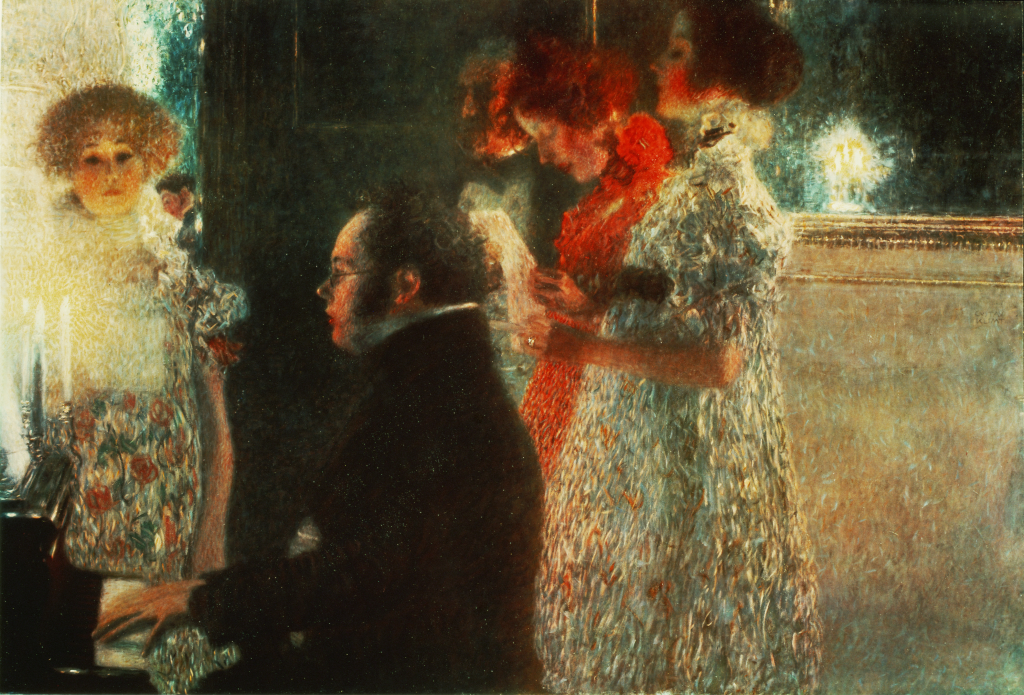
Again, it is a friend, the poet Johann Baptist Mayrhofer (1787-1836), who provides Franz with shelter and let him move into his residence in Vienna.
Even more success for Franz
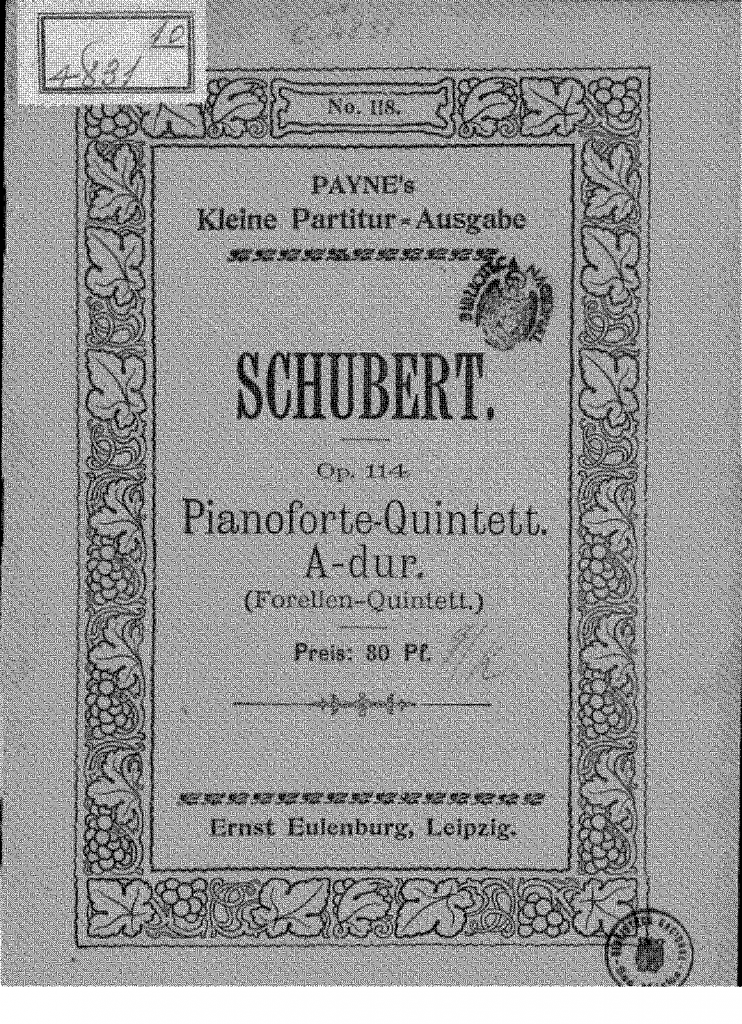
In 1819 Vogl invites Schubert to Kremsmünster, Linz and Steyr, where music was played everywhere. Schubert, full of inspiration, composed the now famous Trout Quintet in A major.
Franz Jäger, a contemporary celebrity, performed his songs in public.
In 1820, his musical comedy The Twin Brothers, composed for Vogl, premiered at the Hofoper. In 1821 Schubert's first song booklet was printed.
He appeared frequently in private musical soirees and became a celebrity in Vienna's inner circles.
The result was a small but adequate remuneration which was sufficient to acquire his own home. Schubert could now survive on his meager earnings.
Musical milestones, a humble selection
"Every time I planned to teach him something new, he already mastered it. I often watched him in mute admiration "(quote by Michael Holzer).
- 1814 Mass in F major, Symphony No.1 in D Major, twenty Lieder including Gretchen am Spinnrade
- 1815 Second and Third Symphony, several piano pieces and choral works, 150 Lieder, including Heidenröslein and Der Erlkönig, and a few operas.
- 1817 Symphony no. 4 in C minor ("Tragic"), Symphony no. 5 in B-flat major
- 1818 Symphony No. 6 in C major.
- 1819 Trout Quintet, Piano Quintet in A major
- 1822 Fantasy in C major, Op.15, Wanderer Fantasy Mass No. 5 A major, the Symphony in B minor, the so called Unfinished.
- 1823 Die schöne Müllerin
- 1824 Trockne Blumen, string quartets in A minor and D minor (Der Tod und das Mädchen)
- 1826 Deutsche Messe
- 1827 The song cycle Die Winterreise
- 1828 The last three piano sonatas and the song cycle Schwanengesang.
A typical day in Franz Peter Schubert life
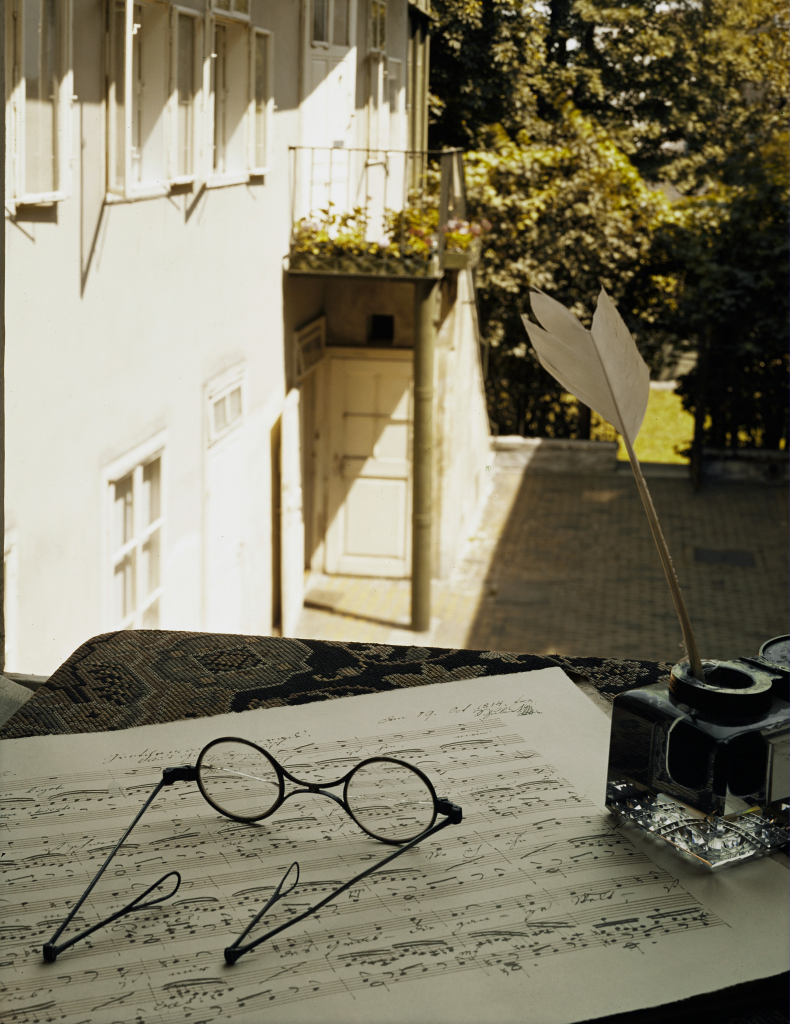
Schubert's daily life followed quite similar routines. His finances forced him to stay in Vienna.
He composed frantically between six o'clock in the morning and early afternoon and was then virtually unreachable. Thereafter he visited a cafe to drink coffee, smoke and read newspapers.
In the evening he went to the theater, opera or the pub with friends. He very rarely stayed past midnight.
Schubert in the salons of Vienna’s High Society
It was a politically troubled and reactionary time. Napoleonic wars were raging in Europe.
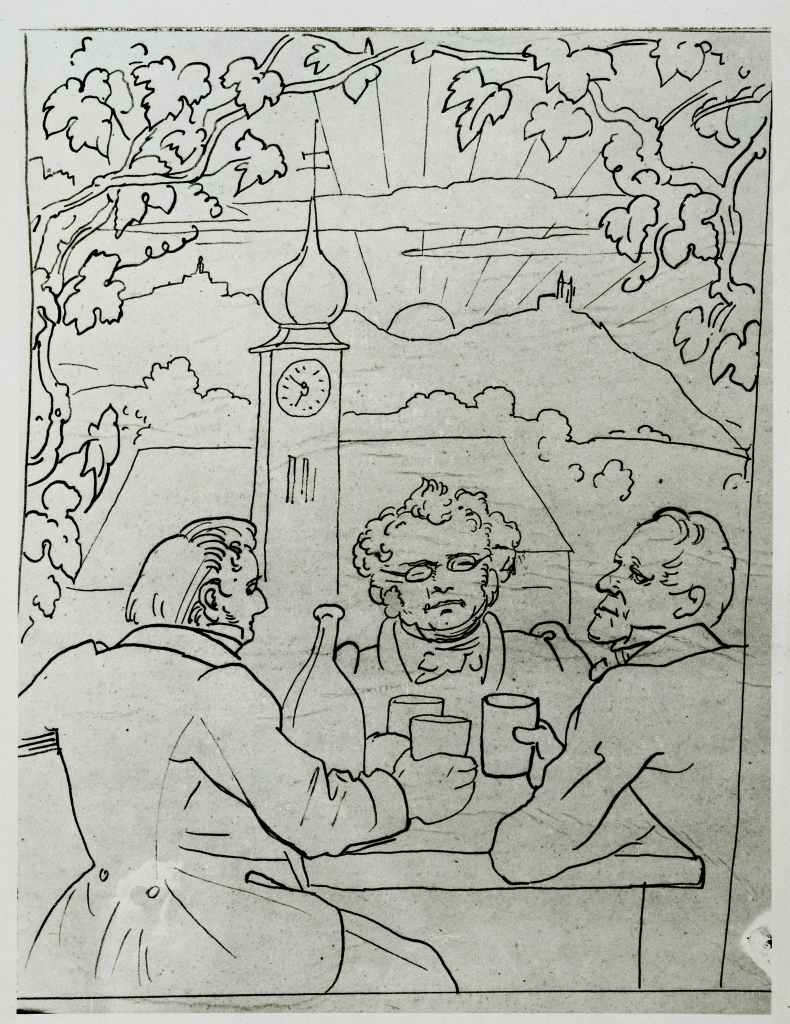
Society gathered evening hours in closed societies in members' homes, also known as salons. They discussed politics and it was exceedingly popular to invite musicians as entertainment.
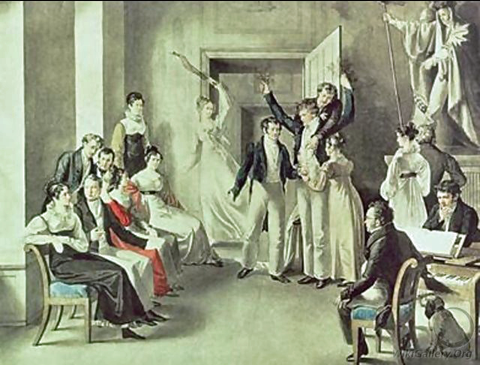
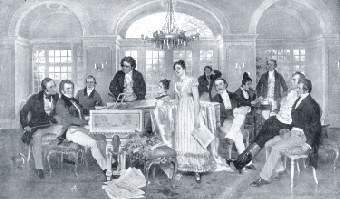
Schubert was introduced in the bourgeois social life in 1820 and became an obvious focal point. In these musical gatherings were often performed with Schubert himself at the piano. The audience could listen to his songs, string ensembles and piano pieces. When it was time to dance, he played and improvised music. If he felt that a phrase or melody was successful, he repeated it to remember it. The Schubertiad hereby was established as a concept among Vienna's cultural and bourgeois elite.
Schubert and the Schubertians
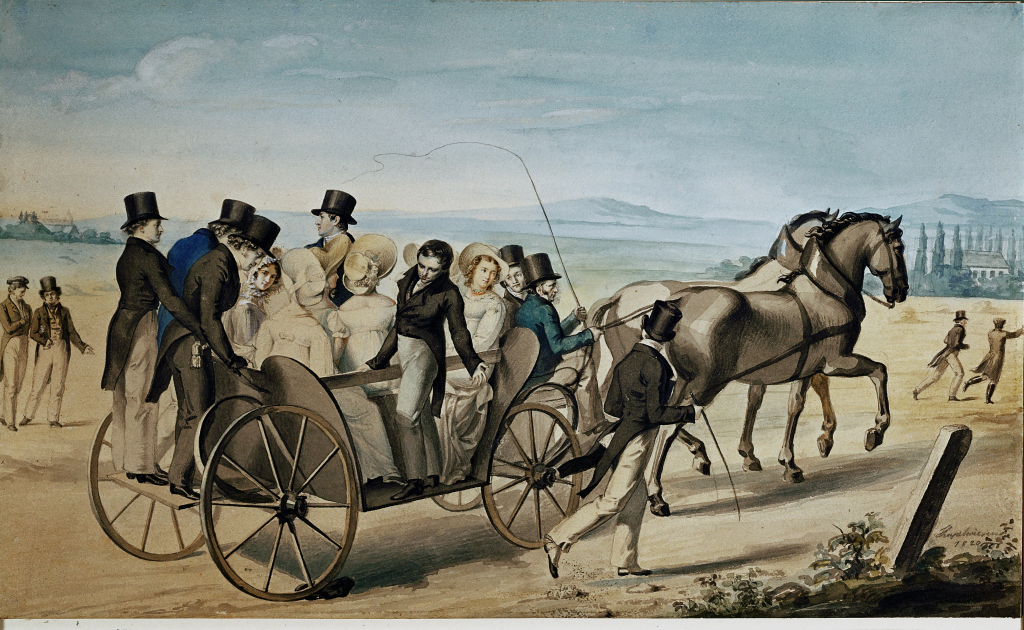
Schubert's friends played a particularly important role in his life, both as a private individual and in his career. The so-called Schubertians consisted of musicians, poets, painters, and influential middle-class families, to whose homes he was a frequent visitor. These Schubertians put their homes at his disposal, opened their salon doors and established relations between Schubert, publishers, and musicians.
At the center of this group were his childhood friends Josef von Spaun, Franz von Schober, Johann Mayrhofer and opera singer Michael Vogel.
Schubert was one of the first free-lance composers, which implied that he was free from being exploited. It meant a certain artistic freedom but also a great financial uncertainty which led him to occasionally undertake missions that he really did not like. He was poor but survived because he was surrounded by a loyal circle of friends who supported him. "Through him (Schubert), we all became friends and brothers" said Josef von Spaun.
The final years
In 1823 when Schubert's health rapidly deteriorated, his fortune turned against him. He oscillates between exuberance and depression and was driven by a restless creativity.
There is speculation about his diagnosis as changes in mood and problems with vision, combined with thirst, were associated with diabetes.
Biographer’s link this to the prevalent syphilis infection which symptoms were well-known. Rumors also circulated that typhus was the cause of death.
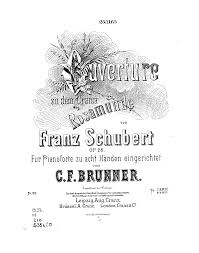
The successes became ever fewer. His last opera attempt Rosamunde got a cold response. In 1826, he unsuccessfully sought service as Court Conductor and failed in attempts to contact German publishers.
When he was not appointed as Court Conductor he commented: "So I am not blessed with the ability to write in the Emperor's style.
The End
In 1827 he led a sporadic social life and was often bleak. He composed, among other things, the fateful song cycle Die Winterreise.
In the summer of 1828, his condition worsened. He moved to the countryside outside of Vienna to his brother Ferdinand’s home, but the moist air further aggravated the health. After a while he became somewhat healthier, but November 11 he was bedridden.
November 17, he worked from his sickbed, on his proof of Die Winterreise when he suddenly became dizzy and lost his mind. Two days later, on the afternoon of November 19, 1828 Franz Schubert died.
Schuberts’ Lieder
Lieder can be described as the barest subgenre of chamber music, composed for private, intimate context.
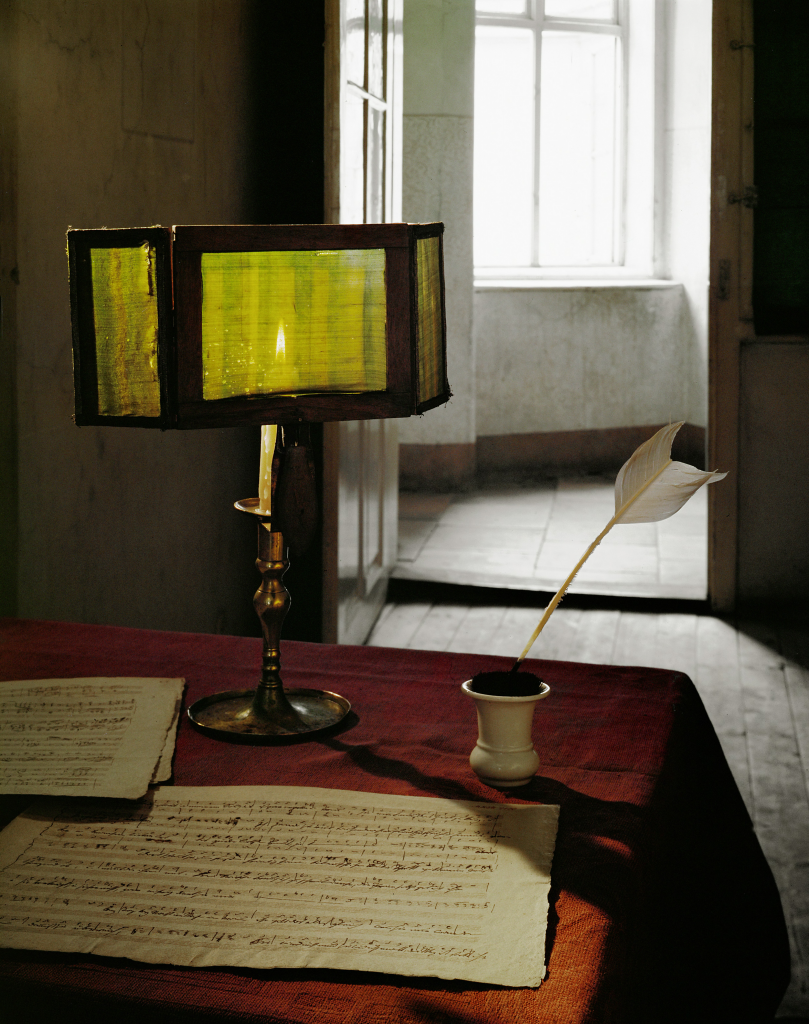
Schubert's work on six hundred Lieder is what posterity remembers him most for. The Lieder genre was a development of the German song tradition. Many contemporary composers wrote songs because there was a demand in the salon music environment.
Schubert brought a role to the piano part that illustrates the poetry in a new way. The piano was not only a support to the vocal part of the song but became an independent voice in Schubert's Lieder. An excellent example is Gretchen am Spinnrade where the piano portrays the spinning rock and Gretchen’s immense frustration.
Schubert’s way of composing assumed poetic breadth. The illustrative mood typical of Romanticism was a feature Schubert was particularly responsive to. He received some recognition for his Lieder during his lifetime, and they were an important part of his meager income.
The choice of Lieder in SchubertAppen.
Gretchen am Spinnrade, D.118, Op.2
Gretchen, obsessed and unrequited by love to the false Faust, is portrayed in a dramatic vocal part and a most vivid piano accompaniment. The voice reaches its peak and the piano suddenly turns silent when Gretchen remembers Faust’s kiss. When the piano starts over Gretchen returns to the monotony of the spinning wheel and her troublesome reflections. Poetry originates from Goethe's Faust with Marguerite as Gretchen's model. Schubert composed the song in 1814.
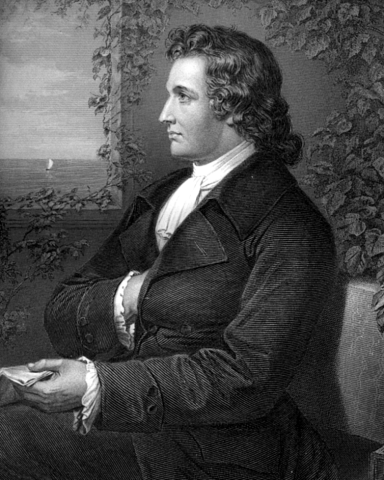
Johann Wolfgang von Goethe (1749–1832)
was a German author, a poet, and a naturalist. He was the author of the Sturm und Drang* era bestseller "The Sorrows of Young Werther". He never took any notice of Schubert and despite the latter's persistent attempts they never met. Schubert composed 74 songs on Goethe poems such as Erlkönig and Heidenröslein.
*Sturm und Drang was a cultural movement in 1700s Germany that initiated the German romantic era of literature, culture, and philosophy.
Du bist die Ruh Op.59 No.8
The piece is one of the most vocally demanding, where the text is reminiscent of a prayer without explicit religious overtones.
The song is brilliant in its strong emotional expression and represents the romantic style with classy minimalist variations in dynamics and harmonies, which are found in both piano and singing voice. Du bist die Ruh has words by Friedrich Rückert, and was set to music in 1823.
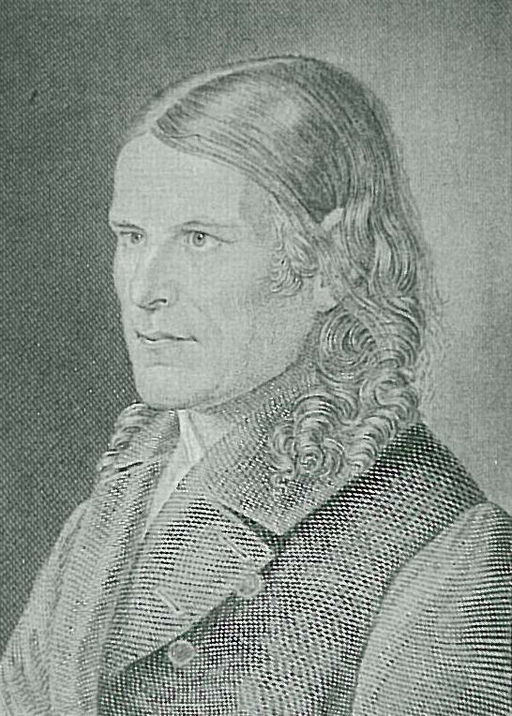
Friedrich Rückert (1788–1866)
was a Bavarian poet, a translator, and a professor of Oriental languages. Composers who set Rückert to music were Robert Schumann, Clara Schumann, Johannes Brahms, Gustav Mahler, Alban Berg, Béla Bartók, Paul Hindemith, Richard Strauss, and others. Engraver Carl Barth was a good friend who Rückert met during his time in Italy. The German saying "Mein lieber Freund und Kupferstecher" ("My dear friend and engraver") is a quote by Ruckert.
Ave Maria, Ellens dritter Gesang, Op. 52 No.6
Ave Maria is a musical setting of text from Walter Scott's poem The Lady of the Lake.
Despite the title, the text is completely independent of the prayer with the same name. The song, which Schubert set to music in 1824, has come to be called Ave Maria as the lyrics begin with those words. The old Latin prayer with the same name has been recently built with Schubert's musical setting because it is proven to work rhythmically with the melody.
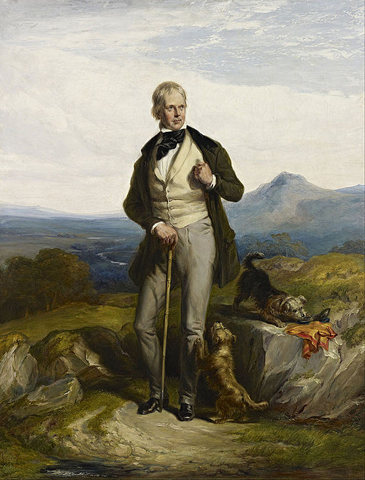
Sir Walter Scott (1771–1832)
was a Scottish writer who is considered the creator of the historical novel genre. He was immensely popular during his lifetime and one of the most widely read novelists in the early 1800s. His most famous work "Ivanhoe" launched the word freelance originally referring to the word mercenary. Scott coined the phrase "Never do nothing."
Nachtstück, Op.36 No.2
The song is a poetic portrayal of a dying man, authored by Mayrhofer. The song has obvious mythological undertones and a clear "Sturm und Drang" profile. Nachtstück is through-composed and may be perceived as a musical miniature drama. The song was set to music in 1819 and published in 1825. In a through-composed song, the music follows a continuously changing process. This is different from a strophic vocal piece, where the same music returns for each verse. In the various parts of Nachtstück the piano part adds completely different characters to the music, which enhances both the emotional and dramatic expression.
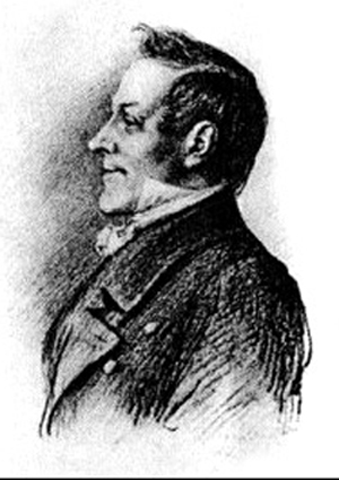
Johann Baptist Mayrhofer (1787–1836)
was an Austrian poet in Vienna's inner circles and a close friend of Schubert’s. Forty-seven of his poems and two librettos for stage works were set to music by Schubert. He faced a tragic death as unrequited love made him jump out of a window.
Frülingsglaube, Op.20 No.2
In Schubert's musical setting the song is given a melancholic undertone in the faith of the spring to come up with new hope. The text is written by Ludwig Uhland.
The vocal part is very melodic, almost hymn like, and flows in smooth legato of the piano part which, like flowing water is distinguished by its sextuplets in the left hand.
Schubert composed the first song in Bb-major but changed key to Ab-major after a two-year-long maturation process before publication. Frülingsglaube was the author Karen Blixen's favorite song.
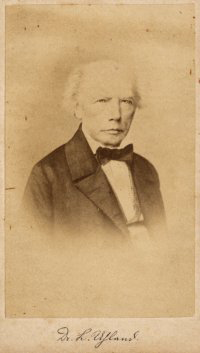
Ludwig Uhland (1787–1862)
was a German poet, a literary scholar, a lawyer, and a politician. He represented the tradition in German Volklied whose aesthetic was later exploited by the National Socialists. The Napoleonic Wars brought Uhland national spirit, but he was also inspired by the medieval literary heritage. You could also find political positions in the "Alte gute Recht", a defense of the state's eternal law.
Seligkeit, D.433
In Hölty's poem the protagonist imagines the heavenly halls where there is celebration, dancing and playing on the harp. He comes to new thoughts in the third verse facing the possibility that Laura may smile at him and decides that the present seems to be the better choice.
The song is in E-major as the original key and has a simple strophic form according to the poem's structure.
The piano introduces each verse with a sprightly solo and proceeds with a simple accompaniment in triple time when the vocal part takes over.
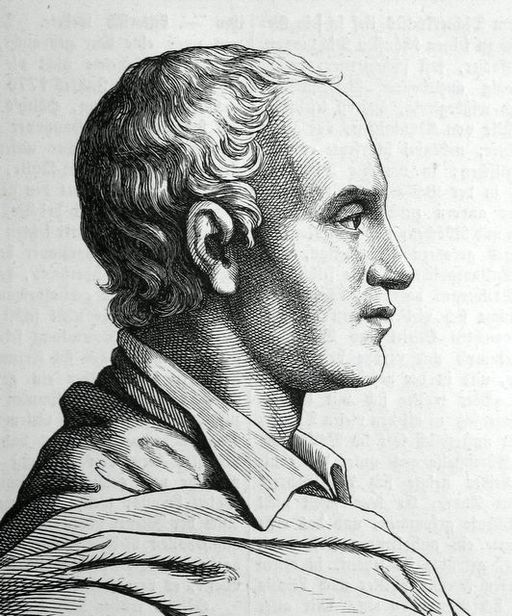
Ludwig Christoph Heinrich Hölty (1748–1776)
Hölty was an era typical German folk poet. His language is characterized by nature-simplicity, harmony, and modesty. His famous ghost ballads are budding traits of "Sturm und Drang." His poems were published mainly in magazines and calendars. Only after his death, they were collected in a book.
The song cycles.
A song cycle is a collection of solo songs with instrumental accompaniment intended to be presented in its entirety. Often there is a story or a theme that holds the work together.
Die Schöne Müllerin, D. 795
Poet: Wilhelm Müller (1794-1827)
Die Winterreise, D. 911
Poet: Wilhelm Müller (1794-1827)
Schwanengesang, D. 957
Poets: Ludwig Rellstab (1799-1860)
Heinrich Heine (1797-1856)
Johann Gabriel Seidl (1804-1875)
The concept of swan song refers to a legend about the mute swan that lives his life in silence but burst out in an incredibly beautiful song at the moment of death.

Thoughts and viewpoints.
The singer Vogl, an academically educated man, described his songs as "truly divine inspirations, extreme of musical lucidity."
Schubert was short, 151 cm tall, with a strong physique. Friends called him "The Mushroom" considering his slightly round figure.
Schubert set to music several poems by Goethe. The great poet never showed him any estimation and ignored all attempts to establish contact.
The big publishing house Breitkopf & Härtel, that published Schubert’s entire opus after his death, rejected his Erlkönig 1817.
Beethoven in his last hours is reputed to have said: Indeed, a spark of Divine genius resides in this Schubert!
Robert Schumann is said to have found the draft to "Unfinished Symphony" by Schubert's deathbed and expressed "the riches that lay here made me tremble with excitement."
Schubert once said: Is there really any happy music? I do not know any.
More thoughts and viewpoints.
Schubert’s friend, Franz Grillparzer, formulated this somewhat criticized inscription for Schubert’s gravestone: "The art of music here entombed a rich possession; but even far fairer hopes. Here lies Franz Schubert."
It is said that Schubert during a meeting in 1820 with the rebellious students were detained and put into custody along with his friend and poet John Senn. Schubert was released quickly and escaped with a black eye while his friend Senn was detained for 14 months.
Times were certainly political. Another friend, Eduard von Bauernfeld, summed it up: "Schubert suffered from the disaster of being Austrian! The Austrian system saves honor and rank only to the golden mediocrity and considers each one who has the slightest talent as a born enemy. Schubert certainly also is such an enemy and remains throughout life, until the state system, this tough boil, is finally lanced. "
A final quote from Schubert: I secretly hope I am able to make something of myself, but who is able to accomplish anything after Beethoven?